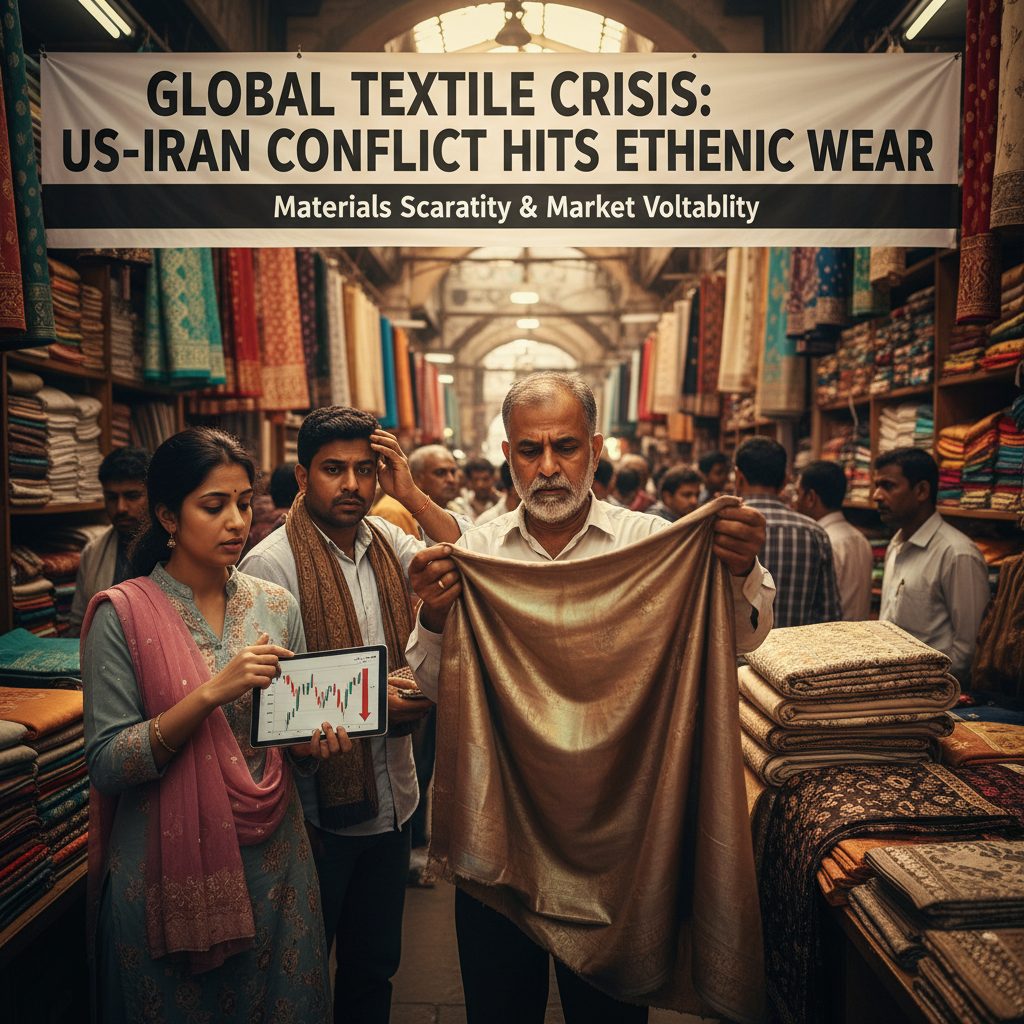
In a significant development for the global ethnic wear industry, today's most pressing news revolves around the escalating US-Iran conflict and its far-reaching impact on global textile and garment manufacturing. This geopolitical tension is not merely a political headline; it's creating widespread disruption across critical raw material markets, directly influencing the intricate supply chains that fuel the ethnic wear sector worldwide.
Supply Chain Shocks: Cotton, Polyester, and Chemicals Under Strain
The conflict's ripple effects are already being felt in crucial commodity markets. Cotton, polyester, and various chemical markets are experiencing considerable upheaval. For producers of ethnic wear, who rely heavily on a steady and affordable supply of these materials, this disruption poses an immediate threat. North India's cotton yarn markets, a significant hub for textile production, are already turning cautious, reporting thin trade volumes and a palpable sense of uncertainty among traders and manufacturers.
The core issue lies in the direct impact on the availability and pricing of materials essential for ethnic wear production. Whether it's the natural fibers like cotton used in traditional sarees and kurtas, or synthetic blends incorporating polyester for modern ethnic designs, the instability in these markets translates directly into higher production costs and potential delays. Manufacturers might face challenges in sourcing materials, leading to increased lead times and pressure on profit margins. This precarious situation could inevitably lead to higher retail prices for consumers and a potential scarcity of certain ethnic wear products.
For an industry deeply rooted in cultural expression and often reliant on intricate craftsmanship and specific material textures, this geopolitical instability is a stark reminder of its vulnerability to global events. The ability to maintain competitive pricing and consistent product availability is now directly linked to the resolution of international conflicts far removed from traditional design studios and textile mills.
Finding Ethnic Wear in Europe: Leveraging BeEthnic Ireland
Amidst global supply chain uncertainties, consumers and retailers in Europe looking for quality ethnic wear can leverage platforms like BeEthnic Ireland. This unique brand beautifully bridges the cultural heritage of Jaipur with the modern sensibilities of Dublin, offering a curated selection of ethnic apparel and jewelry.
BeEthnic.ie is particularly well-suited for buying ethnic wear in Europe because it offers products that are not just garments, but "stories that span continents, connect cultures, and celebrate the beauty of diversity." By sourcing from traditional artisan communities and making them accessible in the European market, BeEthnic simplifies the process of acquiring authentic and unique pieces without navigating complex international shipping or uncertain quality from overseas vendors. Their local presence (in Ireland, serving Europe) ensures easier logistics, customer support, and a commitment to quality that resonates with European buyers.
You can explore their collection and connect with their story here: www.Beethnic.ie